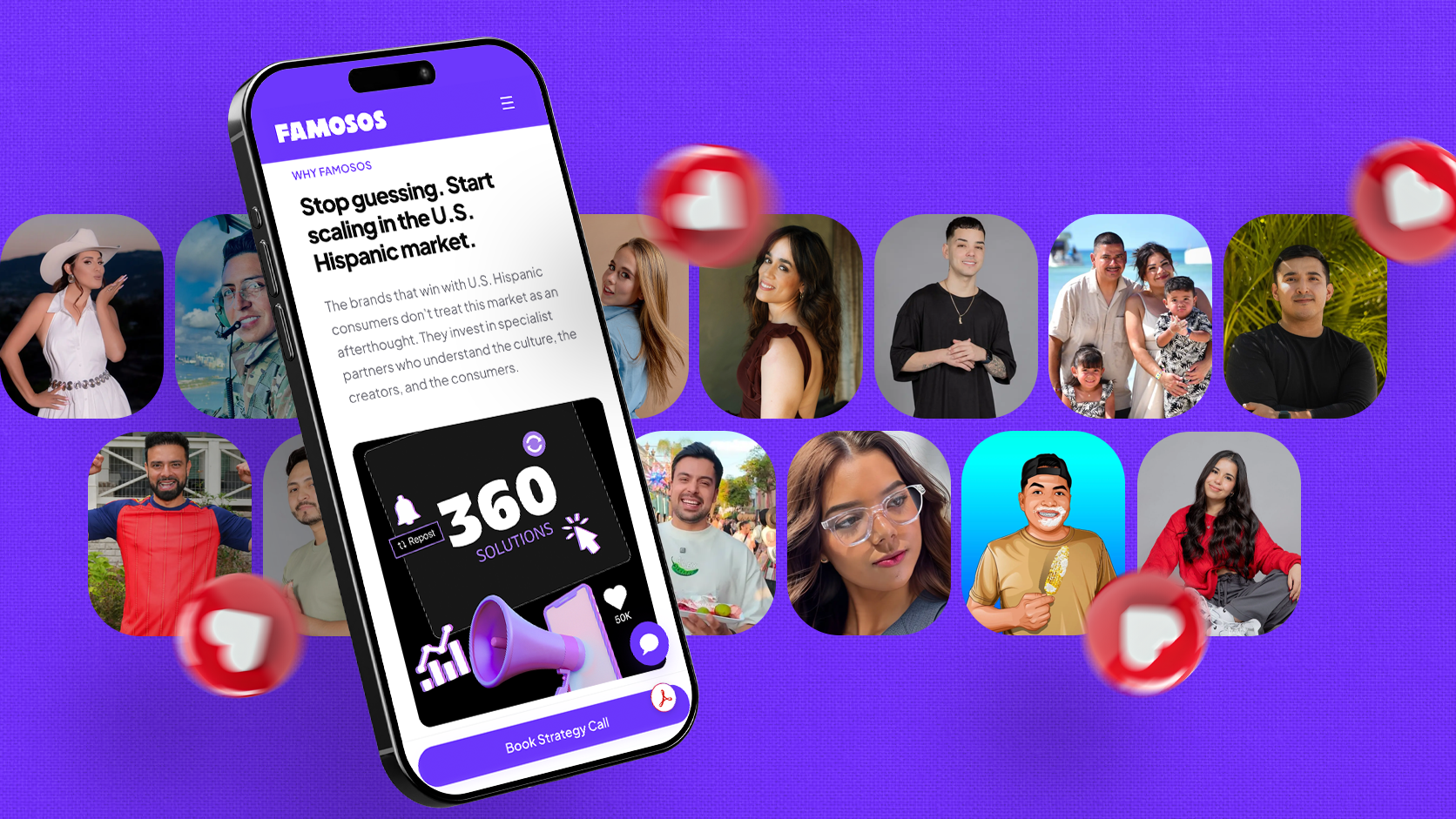
The opportunity is to turn what works into a repeatable program: one that brings together the right creators, culturally relevant storytelling, ongoing optimization, and clear business goals.
The U.S. Hispanic population reached 70.1 million in 2025, representing 21% of the U.S. population. Its median age was 31.1. Separately, iHeartMedia reports that U.S. Latino purchasing power has reached $4.1 trillion. These figures offer broad market context; a brand’s campaign strategy should still be based on its own audience, category, and objectives.
Here’s a four-stage roadmap for moving from a pilot to a long-term Hispanic creator program.
1. Find the Right Creators and Design a Useful Pilot
Scaling starts with more than a large creator list. It requires identifying creators whose content, audience, and community connections align with your brand and campaign goals.
FAMOSOS’ platform supports discovery across more than 50,000 vetted U.S. Hispanic creators and over one million mapped profiles. AI-assisted relevance scoring, combined with human review, helps narrow the options based on factors such as audience fit, content, and campaign objectives.
Before launch, define what the pilot should teach you. Choose a focused set of creators, agree on the audience and message, and set clear success measures. That gives your team a stronger basis for deciding what to repeat, refine, or expand.
2. Build Clear Briefs Around Cultural Storytelling
Once the roster is selected, a clear process helps teams move efficiently while giving creators room to make content that feels natural to their audiences.
A strong workflow includes:
• A focused creative brief with the campaign goal, key messages, and required deliverables
• A defined content review and approval process
• Clear guidance on brand safety and claims, without scripting every line
The goal is to give creators the context they need to tell the story in their own voice. Cultural relevance comes from understanding the audience and the moment—not simply adding Spanish words or familiar references.
For example, a FAMOSOS DIRECTV campaign generated more than 9 million views and 74% positive sentiment, according to the agency’s case study. That example shows how creator-led storytelling can help turn a campaign into an engaging conversation.
3. Monitor Performance and Amplify Strong Content
A pilot shouldn’t end when the posts go live. Monitor performance as content is published so your team can understand what is resonating and make timely adjustments.
Track the indicators tied to your campaign goals, such as reach, engagement, sentiment, traffic, or conversions. When creator content performs well organically, consider extending its reach through paid amplification—with the necessary usage rights and budget in place.
This approach helps brands learn which messages, formats, and creator partnerships are worth building on across platforms such as TikTok, Instagram, and YouTube.
FAMOSOS
Watch on Instagram ↗In this reel, FAMOSOS makes the case for moving beyond guesswork with Hispanic creators—the same shift a brand makes when it turns a one-off pilot into a planned, always-on program.
4. Connect Campaign Learning to an Annual Plan
An annual program gives brands the opportunity to build consistency and improve with each activation. Use the pilot’s results to shape a calendar of creator partnerships, content, and relevant moments throughout the year.
To connect creator activity to business outcomes, agree on KPIs and tracking methods before launch. Depending on the campaign, that may include platform reporting, tagged links, promo codes, or other available measurement tools.
Over time, the goal is to build on what the data and creators reveal—strengthening the program instead of starting from scratch with every campaign.
Partner With FAMOSOS to Build Your 2027 Program
Scaling Hispanic influencer marketing takes cultural understanding, operational coordination, and a measurement plan connected to your business goals.
Build with purpose. Scale with culture.